Do you need a baby bottle brush? Cleaning before sterilising
Understand the job of a bottle brush, what to compare before buying and how cleaning differs from sterilising.
We may earn commission when you buy through our links. Product selection does not change our guidance. This article is not a hands-on product review.
 Feeding
A bottle brush has a straightforward job: helping you clean feeding equipment before it is sterilised. It is not a substitute for sterilising, and you do not need to choose it on the strength of a promise about colic or feeding outcomes. Focus on compatibility and care.
Cleaning and sterilising do different jobs
The NHS advises washing bottles, teats and other feeding equipment in hot, soapy water, using a clean dedicated bottle brush, then rinsing before sterilising. A dishwasher can clean equipment but does not sterilise it. The NHS recommends sterilising feeding equipment until your baby is at least 12 months old.
Check the shape of your equipment
Look at the opening and shape of the bottles you use. Check whether the brush is suitable for their materials and whether a separate teat-cleaning tool is needed. Follow the bottle manufacturer’s cleaning instructions: a brush that fits one bottle range may not suit another. Avoid forcing a brush into a part it is not intended to clean.
Choose for your washing-up routine
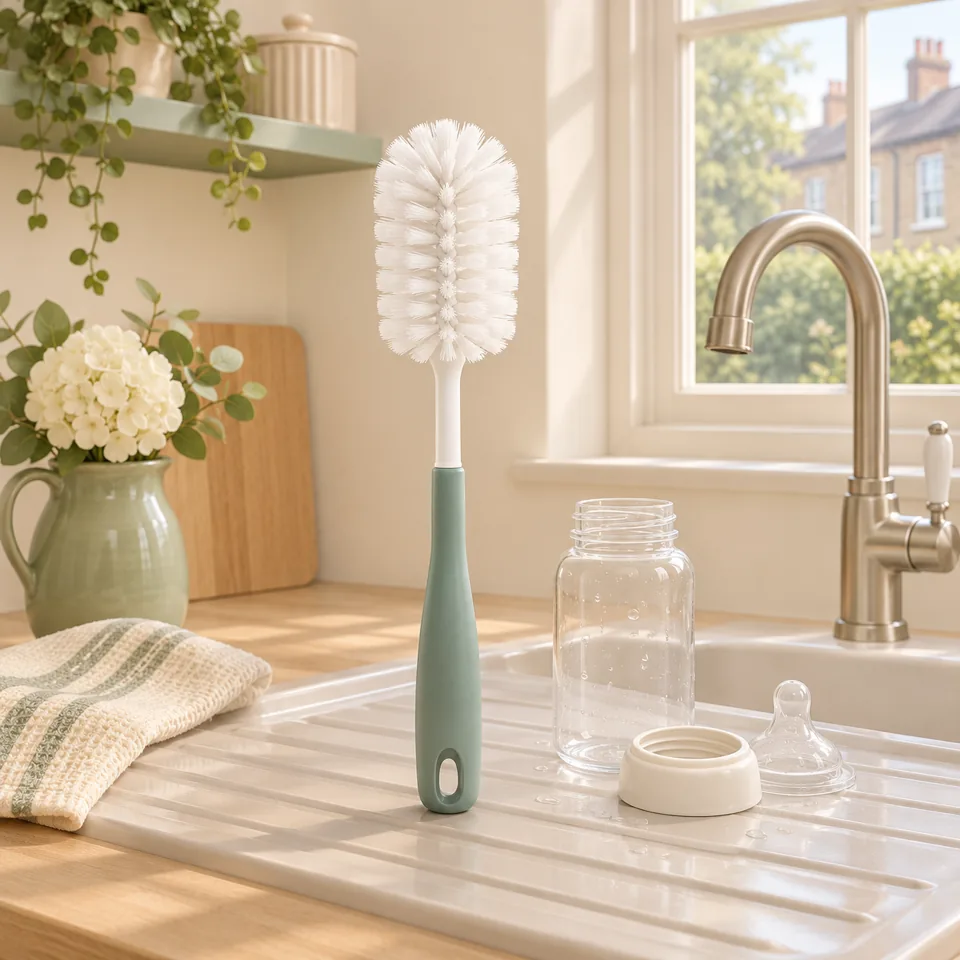
Handle comfort, where you will store the brush and how it is cleaned are useful things to compare. Freestanding storage or an included small cleaner may be convenient, but verify those details for the actual model you select. Consider whether you have enough room to keep the brush separate from general dishwashing tools.
The Munchkin brush in our shop
Our link goes to a Munchkin bottle-brush listing, not the Tommee Tippee brush. Check the exact variant and the manufacturer’s instructions on Amazon before ordering. We have not tested this brush, its reach or how it performs with your bottles, so it is presented as an option rather than a best-in-test winner.
Keep the next step visible
After cleaning and rinsing the feeding equipment, follow your chosen sterilising method’s full instructions. The linked NHS guide covers steam, cold-water solution and boiling. It also explains handling equipment after sterilising. Keep that official method as your reference rather than treating a short product page as a complete feeding-hygiene guide.
Buy what helps you do the job
If your existing dedicated brush is suitable and in good condition, there is no reason to replace it just because another model is on a shopping list. Check the manufacturer’s care and replacement advice and inspect equipment for damage. Useful kit makes a routine easier; it does not replace the routine.
A couple of common questions
Does a bottle brush sterilise bottles?
No. Cleaning happens before sterilising. Follow the full NHS instructions for the sterilising method you use.
Can I use my general washing-up brush?
The NHS advises a clean brush used only for baby bottles. Keep it separate from general dishwashing.